How much playtime does a cat actually need? A realistic daily schedule
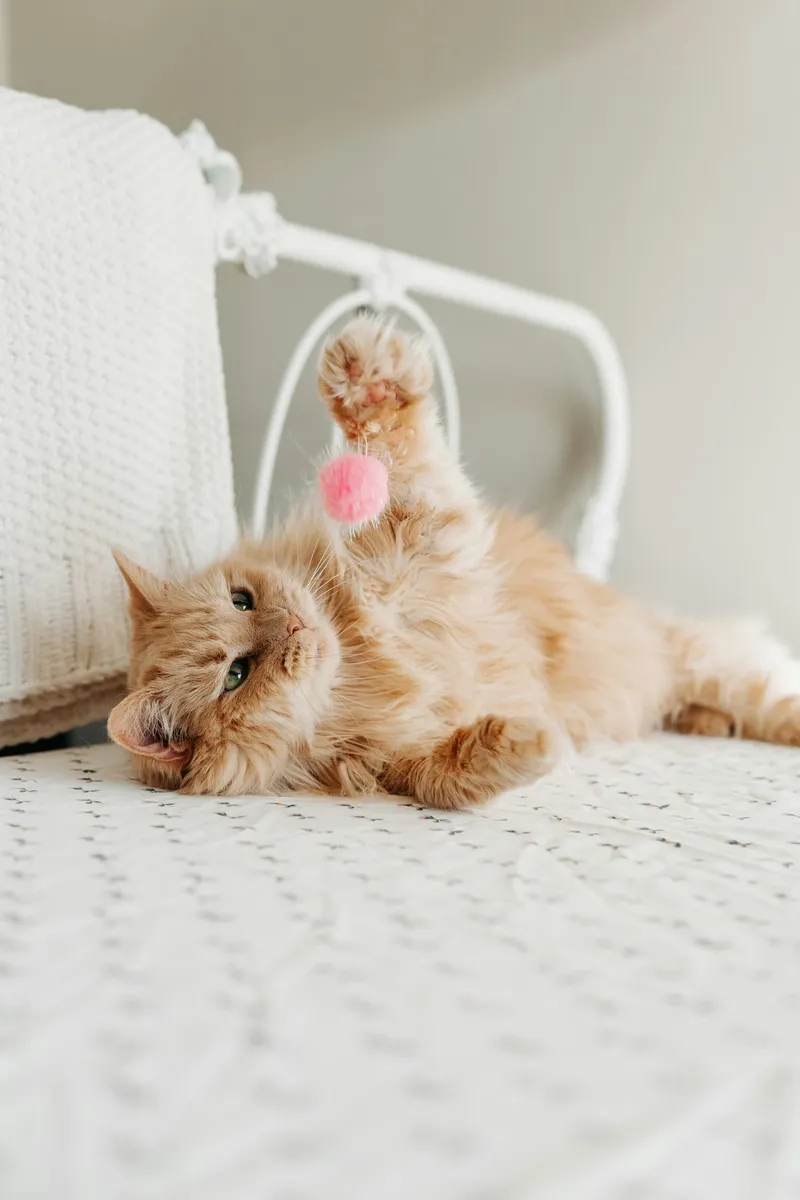
“Play with your cat more” is easy advice to nod along with and hard to actually schedule. Ten minutes, once, before work? Whenever the cat seems bored? Most owners end up either skipping it most days or playing until they get bored themselves, which are two different ways of getting the dose wrong. There’s a simpler target underneath the vague advice, and it’s smaller than most people assume.
The two-session target, and why it’s not one long one
A commonly cited starting point is two sessions a day, each roughly ten to fifteen minutes, rather than one longer session. Cats are built for many short bursts of hunting activity across a day, not one sustained workout. A single 30-minute session tends to run past the point where a cat is actually engaged, and the last third often becomes the human dragging a toy around while the cat watches from a nearby chair.
Two shorter windows, one in the morning and one in the early evening, map onto when many cats are naturally more active anyway. It’s also just easier to actually keep doing. A ten-minute commitment before work is a habit. A 30-minute one gets skipped on a bad morning and then skipped again the next day out of guilt.
What a session should actually contain
Ten minutes of a wand toy dragged in a straight line back and forth isn’t the same ten minutes as one that moves through a stalk, a chase, and something to actually catch at the end. Our guide on the predatory play sequence covers why that closing “catch” matters more than most people expect. A session that ends with an actual grab, followed by a small treat, tends to leave a cat settled rather than still keyed up looking for something to pounce on.
Signs you’re underdoing it
Destructive scratching in spots that aren’t the scratching post, pouncing on ankles or hands, and 3 a.m. zoomies are the three most common tells that a cat’s daily play total is too low, not that the cat is simply “being bad.” These behaviors are frequently a cat generating its own stimulation because nobody scheduled any. Before assuming a behavior problem needs a training fix, it’s worth trying two weeks of a consistent two-session schedule and seeing if the specific behavior fades.
Signs you’re overdoing it, or doing it at the wrong time
Overstimulation looks different from lack of interest. A cat that goes still, flattens its ears, or nips harder partway through a session has usually had enough for that window, not too little. Stopping at that signal, rather than pushing for a clean ending, teaches a cat that play stops when it asks rather than only when a person decides.
Playing right before bed can also work against you if a cat gets wound up rather than tired out. If a session doesn’t end with the eat-groom-rest pattern that follows a real catch, try moving one session earlier in the evening, well ahead of when you actually want quiet. Do that before assuming the cat just doesn’t wind down.
Adjusting the target for age, health, or a genuinely busy week
A kitten or young adult cat often wants more than two sessions and shorter recovery time between them. An older or lower-mobility cat needs the same daily attention with gentler mechanics, covered in our guide on enrichment for senior or low-mobility cats, rather than the full sprint-and-pounce version.
On a day where two real sessions genuinely aren’t happening, a five-minute session plus a food puzzle or a scattered-kibble meal, as covered in our guide on enrichment on a budget, covers some of the same ground. It’s not a full substitute for interactive play, since a puzzle feeder doesn’t provide the same person-and-cat feedback loop, but a partial day beats a skipped one.
What a schedule doesn’t fix
A consistent two-session routine addresses understimulation specifically. If the same restless or destructive behavior persists after a couple of weeks of an actual daily schedule, it’s worth reading the signs that separate boredom from stress rather than assuming a longer session is the missing piece. Play dosage and stress are related but not the same problem, and they don’t share a fix.