Indoor cat enrichment on a budget: what actually works
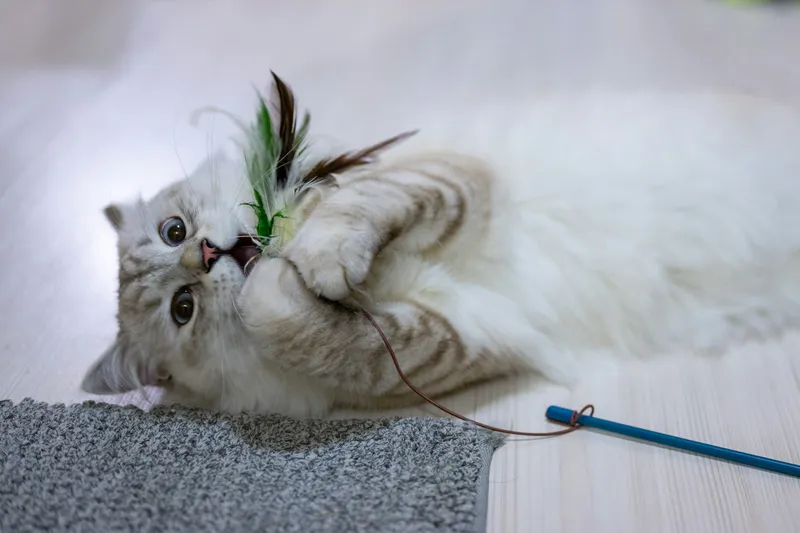
Enrichment gets marketed as a product category, but most of what actually changes a bored cat’s day-to-day behavior costs nothing or close to it. The products help once the basics are in place, not instead of them.
Rotate toys instead of buying more
A cat habituates to a toy within days, which is why a basket of ten toys a cat ignores usually isn’t a lack-of-toys problem. It’s a novelty problem. Put most of them away and rotate two or three back into circulation each week. This alone often revives interest in toys that seemed “boring.”
Feed like a hunt, not a bowl
Splitting a meal across two or three spots around the house, or scattering a portion of dry food for your cat to find, turns a two-minute bowl-eating event into a longer foraging session. This is free, and it’s one of the most consistently effective changes for a bored, food-motivated cat.
Give them a window with something to watch
A perch at a window that overlooks any kind of activity (birds, foot traffic, even a tree moving in the wind) provides ongoing passive stimulation that most cats will use for long stretches without any prompting from you. If you don’t have furniture near a window already, this is worth prioritizing over buying a new toy.
Vertical space before new toys
As covered in our multi-cat cat tree roundup, height matters even in single-cat homes. A single tall perch or a set of wall shelves gives a cat a change of vantage point throughout the day, which is a form of enrichment on its own.
Where it’s worth spending money
Puzzle feeders are the one category where a purchase clearly outperforms a free alternative: they combine the foraging benefit above with a genuine problem-solving task. Beyond that, most enrichment spending has diminishing returns compared to the free changes above. See our puzzle feeder roundup if you’re ready to add one.
When enrichment isn’t the actual issue
If you’ve made these changes and the restlessness, vocalizing, or destructive behavior hasn’t shifted after a couple of weeks, it’s worth checking our guide on reading your cat’s stress signals. Understimulation and stress look similar from the outside, but they don’t respond to the same fixes.