Is my cat stressed? 7 body language signs to watch for
Cats are subtle about stress. There’s no whining, no pacing at the door, just a series of small, easy-to-miss signals that build up over days or weeks. Here’s what to actually watch for.
Ears and whiskers
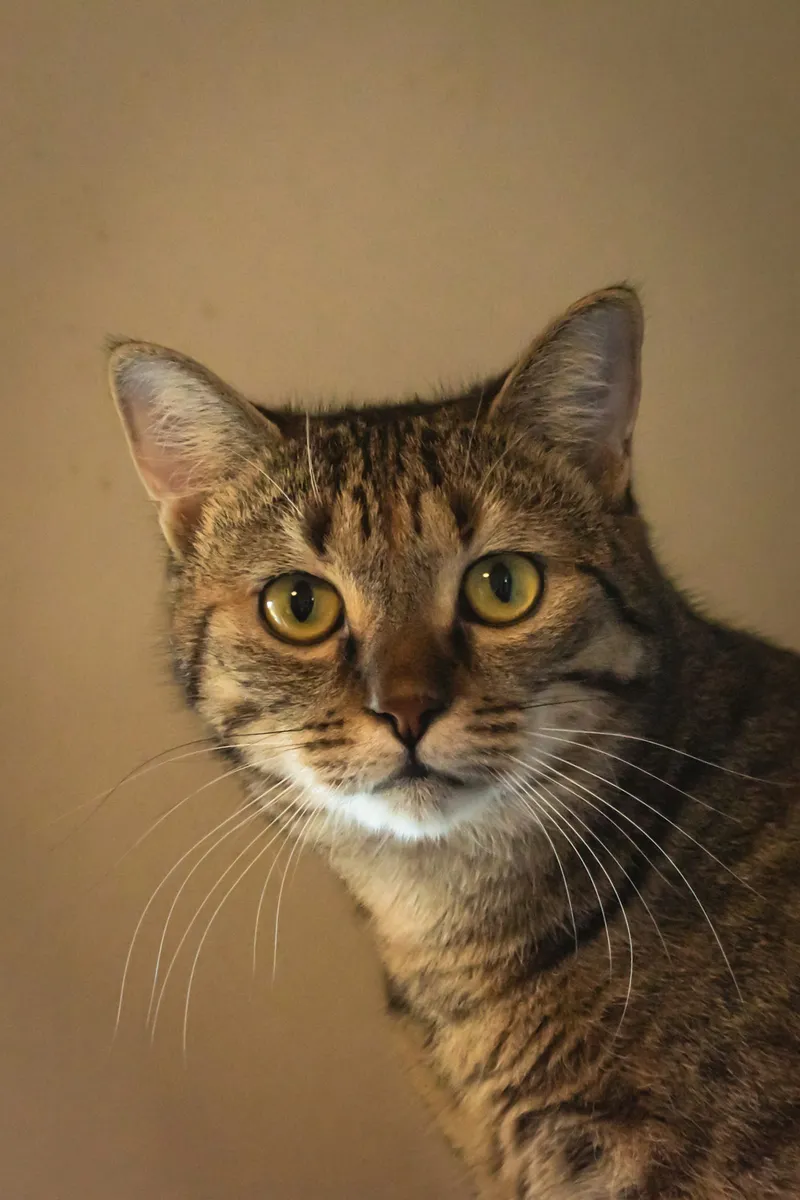
A relaxed cat’s ears sit upright and loosely forward. When a cat is stressed, the ears flatten sideways (“airplane ears”) or rotate backward, and the whiskers pull tight against the face instead of fanning out. This is often the earliest sign, and the easiest to miss if you’re not looking at the face directly.
Ears upright and swivelling, whiskers forward: alert and tracking something, not yet distressed.
Tail position
A tail held low, tucked, or thumping rapidly against the floor while the cat is otherwise still is a strong signal. This is different from the slow, relaxed tail-tip flick of a cat that’s simply alert or curious.
Overgrooming or undergrooming
Stress can push grooming in either direction. Some cats over-groom to the point of bald patches, usually on the belly or inner legs. Others stop grooming almost entirely, leaving the coat looking dull or slightly matted.
Hiding more than usual
Occasional hiding is normal cat behavior. A meaningful change is a cat that used to greet you at the door and now stays under the bed for hours after a routine event: a guest, a delivery, a moved piece of furniture.
Changes at the litter box
Stress is one of the most common causes of litter box avoidance in cats with no underlying medical issue. Watch for urinating just outside the box, spending noticeably longer in the box than usual, or avoiding it around specific times of day.
Appetite shifts
A stressed cat may eat less, eat faster than normal, or become newly picky about food. Because appetite changes can also signal a medical issue, any sudden shift lasting more than a day or two is worth a vet call, not just a stress diagnosis.
Increased vocalization
Some cats go quiet under stress; others get louder, with more frequent meowing, especially at times that don’t match their normal routine (like the middle of the night).
What to do next
If you’re seeing two or more of these signs together, start by identifying what changed in the last few weeks: a new pet, a moved litter box, construction noise, a schedule change. Removing or softening that trigger usually resolves things faster than any product. From there, our Calm Home picks cover the tools (diffusers, hideaways, feeding routines) that actually help once you’ve identified the cause.