Transitioning a cat to puzzle feeding without a hungry standoff
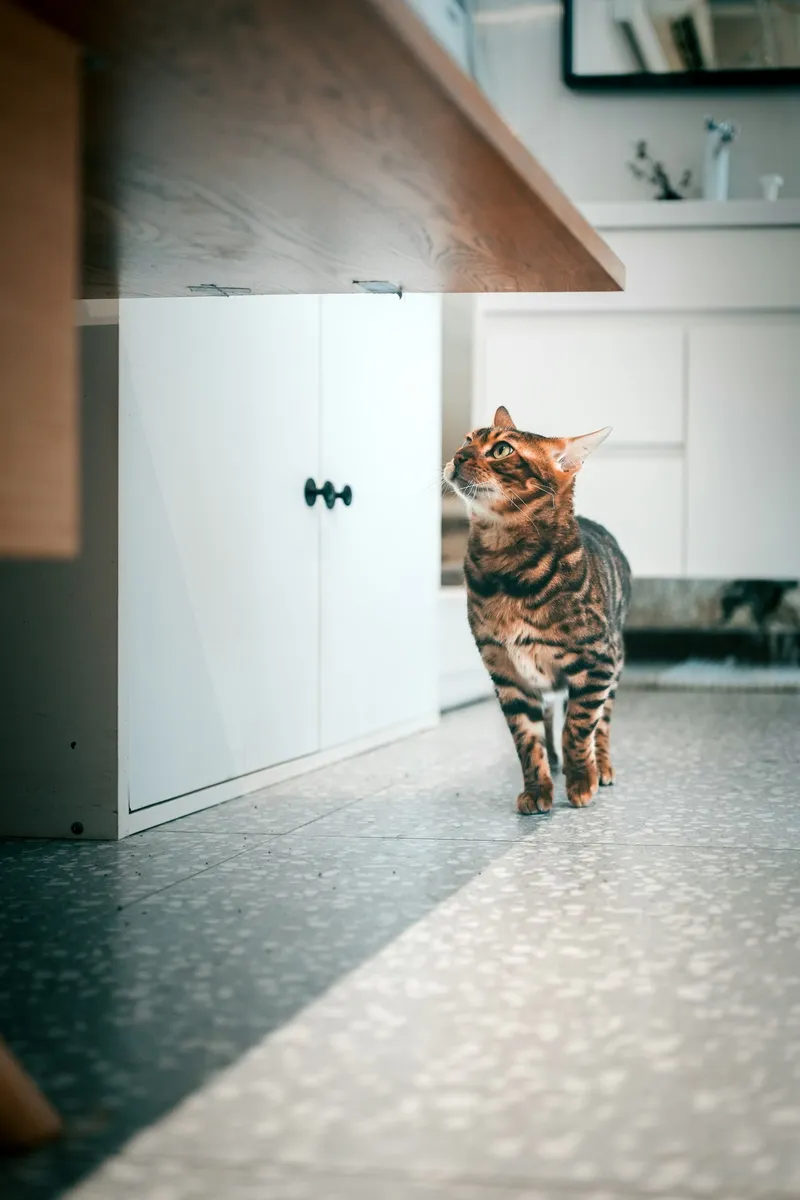
Our reviews of the PetSafe SlimCat and Doc & Phoebe’s Hunting Feeder both cover what the feeders do once a cat has learned them. Getting there is a separate problem. A cat that has eaten from a bowl its whole life doesn’t recognize a puzzle feeder as food at all on day one. The switch fails more often from being rushed than from the feeder itself being wrong for the cat.
The bowl removed, the puzzle removed too
The most common mistake is retiring the bowl the same day the feeder shows up. A cat that doesn’t yet associate the new object with food just doesn’t eat, sometimes for most of a day, before anyone notices the feeder was never actually understood. That’s not stubbornness. It’s a cat waiting for the thing that has always meant dinner to reappear.
Keep the bowl down, full, and in its usual spot while the feeder sits nearby with a few pieces of kibble visible and easy to reach. The goal of week one isn’t nutrition. It’s teaching that this new object sometimes has food in it, with the bowl still there as a safety net the whole time.
Make the very first win almost too easy
Whatever feeder you’re starting with, set it to the easiest setting it has. A rolling ball should be wide open. A hiding spot should be obvious, not tucked under furniture. The point of the first few days is a fast, repeatable payoff, not a real test of effort.
A cat that pushes a feeder twice, gets nothing, and walks away rarely comes back to try a third time. Difficulty is something to add gradually once the basic idea (this object gives up food if I work at it) is already established, not something to test for on day one.
Taper the bowl once the feeder is actually working
Once a cat is reliably getting food from the feeder on its own, several times, without any coaxing, start shrinking what’s in the bowl rather than pulling it outright. A smaller portion in the bowl alongside a full feeder nudges the balance without a single day of noticeably less food. This can take anywhere from a few days to a couple of weeks depending on the cat, and there’s no real downside to going slower than feels necessary.
Resist the pressure to hit a specific timeline. A cat that’s still mostly eating from the bowl after two weeks hasn’t failed. It just needs longer, or a different feeder type, which is a different problem from giving up on the idea entirely.
Cats that shouldn’t go through this cold
Some cats need a different approach from the start, not just a slower version of the same one. A senior cat with arthritis may not manage a feeder that requires batting or reaching into a hole, even if the behavior interests it. A cat on a strict medical diet, or one who needs medication mixed into food, usually needs the bowl to stay primary so dosing and intake can actually be tracked.
In a multi-cat home, a feeder introduced to the whole household at once can turn into a resource to guard rather than a game, especially between cats that already have tension. Introduce it to one cat at a time in a separate space first, and watch body language before assuming every cat in the house is ready for the same object on the same day. Our resource guarding checklist covers what that tension looks like before it becomes an actual fight.
Signs it isn’t the right fit, not just a slow start
A cat that shows no interest in the feeder at all after a couple of weeks of easy, visible setup, even with the bowl still available, may simply not be a forager. That’s a real and common outcome, not a training failure. Weight loss, skipped meals that go beyond a day, or a cat that seems anxious or frantic around the feeder rather than curious are reasons to stop and go back to the bowl, not reasons to push harder.
A medical cause should be ruled out before deciding the feeder itself is the problem. A sudden drop in appetite is a vet question first, independent of what feeding method is in use at the time.
Bottom line
Introduce a puzzle or scatter feeder beside the bowl, not instead of it, set the first few attempts up to be nearly impossible to fail, and let the bowl shrink gradually instead of disappearing on a schedule. A cat that never takes to foraging hasn’t wasted anything bought cheaply, and one that does gets a redone version of hunting it was built for in the first place.