Doc & Phoebe's Indoor Hunting Feeder review: turning one bowl into three hidden hunts
Our take
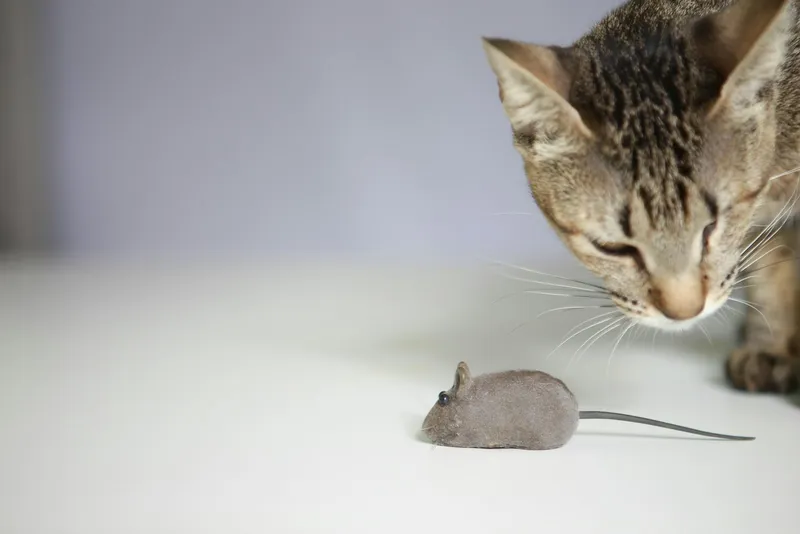
Three fabric-skinned mice with an adjustable opening, meant to be filled with kibble and hidden around a room instead of poured into a bowl. The mechanic is scattering one meal into several separate hunts, not just slowing a single dispenser down.
Check price at AmazonDisclosure: This post contains affiliate links. As an Amazon Associate, we earn from qualifying purchases at no extra cost to you. See our full affiliate disclosure.
Every puzzle feeder we’ve covered so far keeps the hunt in one spot. The PetSafe SlimCat rolls across a floor, and a stationary board sits wherever you put it down. Doc & Phoebe’s set does neither. It’s three small mouse-shaped pouches you fill by hand and hide in different places, so a single meal turns into three separate trips instead of one feeder a cat parks itself in front of.
Why spreading the hunt matters more than slowing it down
A bowl removes two things at once: the effort of getting food and the need to move to find it. Most puzzle feeders solve the first problem. This one is built around the second. Our guide on the predatory play sequence covers why a cat’s hunting drive is built around searching, not just extracting, and a feeder that stays in one place only ever exercises the extracting part.
Hiding three mice means a cat has to patrol a room, check likely spots, and rediscover a find each time, closer to the real pattern of many small hunts a day than one static puzzle visited repeatedly.
How the filling and hiding actually works
Each mouse has an opening sized by a sliding adjustment, wide for an easy first week and narrower once the mechanic clicks. You measure kibble with the included scoop, load each mouse, and tuck the three of them into different spots around a room: behind a chair leg, on a low shelf, half under a rug edge.
Start obvious. A mouse wedged in plain sight for the first few days teaches the pattern (finding a mouse means food) before you ask a cat to search harder for it. Once a cat reliably checks a handful of regular spots without being shown, moving the hiding places further apart or into less obvious corners is the next step up.
Where the fabric skin changes the interaction
A rolling ball or a wooden box asks a paw to push, roll, or reach into a fixed hole. The nylon and rayon fabric skin here asks for something closer to pouncing and carrying, texture a cat can actually sink claws and teeth into the way it would a real catch. For a cat that likes to carry toys around the house after batting them, that’s a different reward than watching kibble spill out of a rolling shell.
It’s a tradeoff, though. A fabric surface holding food residue needs real washing, not a quick wipe, which is the maintenance cost of choosing texture over hard plastic.
Construction and the part that’s slower than a bowl
The core of each mouse is food-grade, BPA-free plastic, dishwasher-safe on the top rack, with the fabric skin pulled over it machine washable and tumble-dry safe. That’s a reasonable care routine for something handled daily.
The actual daily friction is loading three small openings by hand twice a day instead of pouring one scoop into a bowl. Our puzzle feeder roundup covers options that trade some of this hunting realism for a feeder that’s faster to refill, worth a look if the extra handling time is the dealbreaker.
Who this is wrong for
Skip it in a home with a toddler who treats small hidden objects as a scavenger hunt of their own, or a dog that will clear every mouse before the cat gets a turn. The whole system depends on only the cat finding them.
Skip it if the real goal is slowing down a fast eater who gulps and vomits. Spreading a meal into three spots doesn’t change how fast a cat eats once it’s found one, so a dedicated slow-feed bowl still does that job more directly.
Skip it if wet food is the only diet in the house. The mice are built around dry kibble, and nothing about the design adapts to anything wetter.
Skip it if you know you won’t keep moving the hiding spots. Three mice in the same three corners every day stop being a hunt and become a routine the cat solves without thinking, which is the same flatness a bowl has, just split into three locations.
Bottom line
Buy it for a cat that already carries toys around after batting them, or a household willing to keep the hiding spots moving instead of settling into the same three corners. The payoff is a meal that asks for patrol and search, not just effort at one spot. If daily hand-filling three openings sounds like more friction than it’s worth, a single rolling or stationary feeder gets closer to the convenience of a bowl while still asking for some work first.
What we liked
- Splits one meal into three separate hiding spots, so a cat works the whole room instead of one feeder in one place
- The pick-your-size opening on each mouse lets you start wide for an easy win and narrow it as the cat gets better
- A soft fabric skin gives paws and teeth something closer to real prey texture than a hard plastic shell
- The included scoop keeps portions consistent even when a meal is split three ways
- Plastic core is dishwasher-safe on the top rack and the fabric skins are machine washable
What we didn't
- Filling three small openings by hand is fussier than pouring kibble into one bowl or hopper
- The hiding spots need to change and get harder over time, or the cat just learns the three usual corners
- Not a fit for a home where a toddler or a dog will find the hidden mice before the cat does
- Fabric skins need regular washing to stay sanitary, which is one more laundry item to keep track of
- Nothing here helps with wet food, since the mice are built around dry kibble