Resource guarding in multi-cat homes: the checklist beyond food bowls
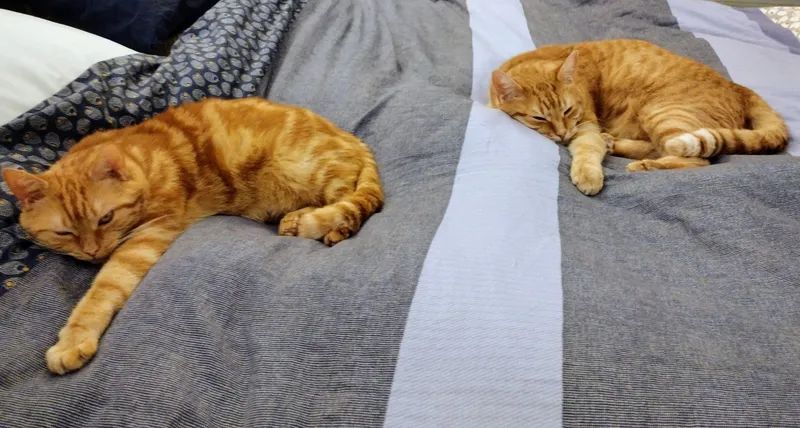
When two cats in the same house start tensing up around each other, the first thing most guides check is the food bowl. That’s a reasonable start, but food is only one of at least five resource categories cats compete over, and guarding around the other four is easier to miss because it rarely looks like a fight. A cat that quietly stops using the window perch, the good end of the couch, or the litter box near the stairs isn’t relaxed about sharing. It’s often lost a negotiation nobody else in the house noticed was happening.
The five resources cats actually compete over
Food and water get the most attention, but litter boxes, elevated territory (perches, cat trees, windowsills), preferred resting spots (a specific chair, a sunny patch of floor), and human attention are just as commonly guarded. A cat can be perfectly relaxed about food and still block another cat from a favorite window ledge every single afternoon. Treating “resources” as food alone misses most of the actual competition happening in the house.
What guarding looks like when it isn’t a fight
Active guarding is a stare, a blocked doorway, a swat. Passive guarding is quieter and shows up as absence: one cat simply stops going to a spot, a bowl, or a box that a more confident cat has claimed, usually well before anyone sees a confrontation. If a cat that used to enjoy the living room window now spends the day under a bed, that’s the guarding, not the aftermath of a fight you missed. Same goes if a second litter box near the guarding cat’s favorite hangout has gone unused for weeks.
A room-by-room way to check for it
Walk through the house and, for each resource, ask where it sits relative to a cat’s favorite spot and whether a cat has to cross that spot’s sightline to reach it. Litter boxes and food and water stations placed along a single hallway, or all visible from one couch, create a bottleneck a confident cat can guard without doing anything active at all. Spreading resources across separate rooms, or at minimum out of direct line of sight from each other, removes the choke point rather than asking the cats to negotiate around it. For litter box placement specifically, see our litter box rules for multi-cat homes; for climbing and window space, vertical territory covers why height solves some of this that floor space can’t.
Adding more resources vs. separating cats
Guarding around a specific bowl, box, or perch is usually solved by adding a duplicate somewhere else in the house rather than by removing anything or separating the cats. Guarding around a person, a doorway, or the whole shared space itself is a different situation, and duplicating resources won’t fix a relationship that has already broken down into active blocking or stalking. If sessions look more like the second case, our decision guide on how much separation fighting cats actually need walks through when a temporary split makes more sense than another food bowl.
When the guarding is actually about food specifically
If food and water turn out to be the one category driving most of the tension, a feeding setup built around separation, timed access, or microchip-restricted bowls solves that specific problem more directly than general resource spreading. Our feeding setups for food guarding roundup covers those options if the checklist above points back to the food bowl after all.