Vertical territory 101: why height matters more than floor space in multi-cat homes
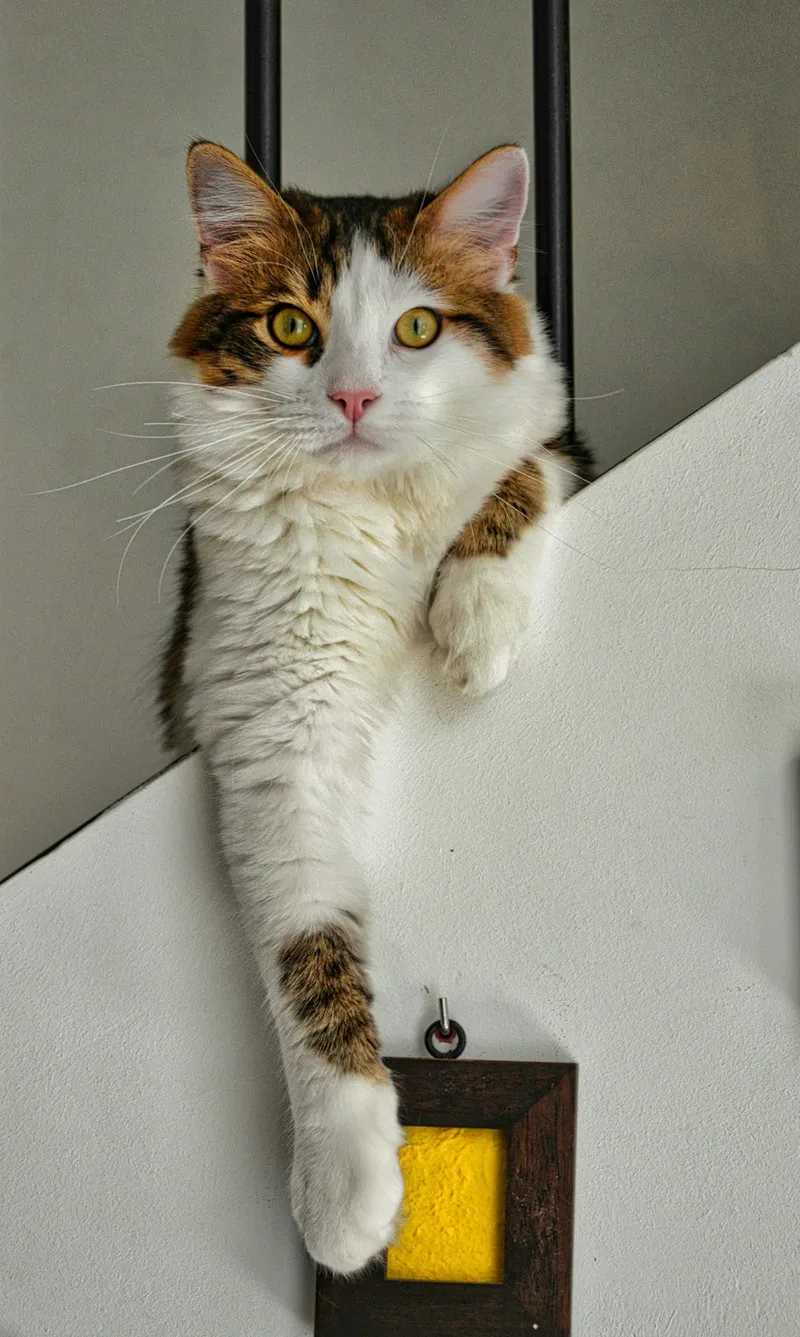
A common assumption is that multi-cat fighting comes down to not having enough space. In practice, a small apartment with height in it (shelves, a tall cat tree, a clear path across furniture) often works better than a large house that’s entirely flat. Cats don’t split territory the way humans do, by square footage. They split it by who controls which vantage points, and a home with only floor-level space forces every cat to compete for the same limited set of positions.
Why height defuses tension in the first place
Most everyday cat conflict isn’t really about resources, it’s about two cats ending up in each other’s space with no way to avoid it. Vertical options change that math. A cat that can move up onto a shelf or the top of a cat tree isn’t retreating in defeat, it’s removing itself from a tense situation without having to pass close by the other cat to do it. Height also gives a lower-confidence cat a way to observe the room from safety before deciding whether to come down, instead of being stuck choosing between a confrontation and hiding somewhere with no visibility.
One cat tree isn’t vertical territory
A single tall cat tree in one corner of one room helps. But it’s still one resource that one confident cat can end up guarding, the same way one litter box or one food bowl can become a control point. Real vertical territory means multiple separate elevated spots spread across different rooms: a windowsill here, a wall shelf there, the top of a bookcase somewhere else. The goal is that no single cat can watch or block every high spot at once.
Build paths, not just destinations
A shelf that’s only reachable by one exact jump from one exact spot on the floor is a bottleneck, not a path. Cats are more likely to actually use vertical space when they can move along it in more than one direction, shelf to shelf, or tree to windowsill, without having to drop back down to ground level in between. This matters most in the part of the house where tension is highest. If two cats keep tensing up in the same hallway or living room, that’s the space that most needs a connected vertical route through it, not just a single perch.
Height only defuses tension when it comes with an escape route. A single tall tree gives a cat somewhere to go and nowhere to leave, which is why one tower usually is not enough in a house with friction.
Match height to confidence, not the other way around
It’s tempting to put the newest or most nervous cat’s resources up high, reasoning that height equals safety. In practice, a cat that isn’t confident about jumping yet may avoid a resource placed somewhere it can’t comfortably reach, and end up more cornered on the ground than before. Start lower and stable (a wide, low shelf or step) and add height gradually as a cat starts using it, rather than assuming any elevated surface is automatically the safer option for every cat in the house.
What this doesn’t fix
Vertical space reduces the number of forced encounters, but it won’t resolve conflict that’s already escalated into real fighting between two specific cats. If a household has active tension or fighting, adding height is worth doing alongside separation and slow reintroduction, not as a substitute for it. See our guide on why cats that got along for years suddenly start fighting if the conflict is new, or introducing cats without a fight if you’re starting the reintroduction process from scratch.