Cat anxiety and loud noise: what actually helps during storms, fireworks, and construction
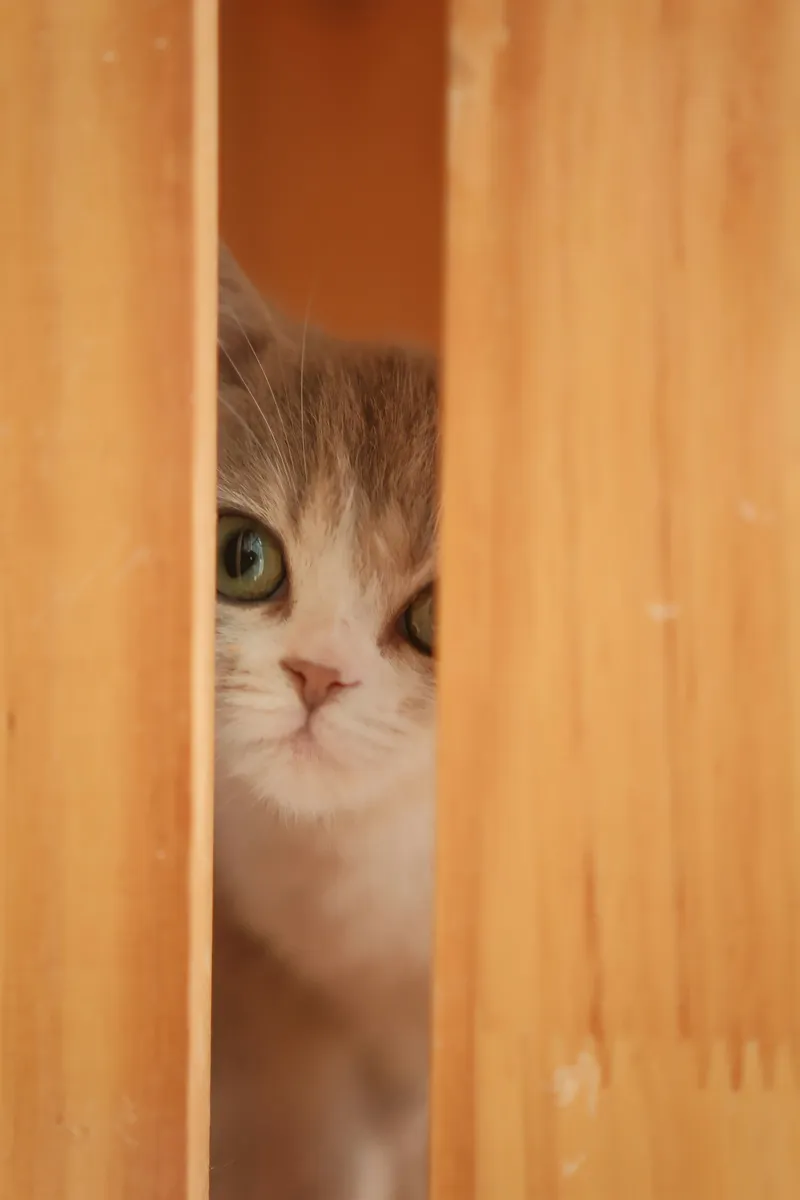
A cat’s hearing range runs well above a human’s, into frequencies we can’t register at all, and their startle reflex evolved around a simple rule: a sudden loud sound usually means something dangerous is close by. That reflex doesn’t know the difference between a real threat and a nail gun two houses over. What it produces instead is a predictable set of reactions, bolting, freezing, flattened ears, a mad dash under furniture, whether the sound is a single crack of thunder or a jackhammer that starts every morning at eight. The reactions look similar. The right response to them isn’t.
A single loud event is different from ongoing noise
Fireworks and a thunderstorm are acute: intense, unpredictable, and over within minutes to hours. The goal there is getting through the event itself, then letting a cat’s stress hormones come back down afterward. Construction, renovation, or a noisy street is chronic: lower-intensity but present for days or weeks at a stretch, with no single moment to get through and no clear endpoint a cat can sense. Chronic noise wears a cat down gradually rather than spiking them all at once, and it calls for changing the environment, not just riding out one bad night. Treating a six-week renovation like a single storm, something to comfort through and then forget, misses that it needs an ongoing plan instead.
During an acute event: reduce what a cat can hear and see
Close windows and curtains before a known event like fireworks starts, since sight lines to flashes make the noise worse, not just the sound itself. A TV or white noise machine at a moderate volume in the room a cat is already hiding in masks some of the sharpness without adding its own jarring cues. Let a cat go to wherever it’s already chosen to hide, under a bed, in a closet, rather than pulling it out to hold or comfort. Being physically restrained during a fear response tends to escalate it, even when the intent is reassurance. If a safe room is already set up, this is exactly the situation it exists for. See our guide on setting up a dedicated calm-down space if one isn’t in place yet.
What actually helps, and on what timeline
A pressure wrap works within minutes because it’s a physical, not chemical, intervention, which makes it suited to a single predictable event like a forecasted storm or a scheduled fireworks show. A pheromone diffuser works on a completely different timeline, building up over one to two weeks of continuous use, so it isn’t something to plug in the afternoon a storm is forecast and expect results from that night. If ongoing renovation noise is the actual trigger, a diffuser run continuously for the duration of the work is the better fit of the two. Our guide on how pheromone diffusers and calming collars actually work breaks down the mechanism and evidence behind each, and our roundup of calming collars and wraps covers specific products.
What doesn’t help, and can make it worse
Punishing or scolding a cat for bolting or hiding does nothing to the fear response itself and just adds a second reason to avoid the area. Forced exposure, carrying a cat toward the noise source or into an open room during a storm to “get them used to it,” works against the nervous system rather than with it. Fear doesn’t fade under pressure, it gets reinforced. Treating every loud sound the same regardless of context is a mistake. A cat that startles at a dropped pan but shows no lasting distress is not the same as a cat that stays flattened and unwilling to eat for hours after a storm passes. The second pattern is the one that needs more than in-the-moment comfort.
When it’s more than noise sensitivity
Occasional startling at a sudden sound is normal cat behavior, not anxiety. What’s worth tracking is whether the recovery time keeps stretching, a cat that used to settle within twenty minutes of a storm passing now takes hours. Or watch for stress signs that start showing up between noise events rather than only during them. That pattern points toward a lower general stress threshold rather than noise sensitivity specifically, and it’s worth ruling out first with our guide on reading your cat’s stress signals. If stress is constant regardless of what’s happening in the house, our guide on when to call a vet behaviorist covers the next step.