Safe rooms 101: setting up a dedicated calm-down space for an anxious cat
When a cat is overwhelmed, whether it’s guests in the house, a loud repair crew, or just a bad day, the instinct to hide is normal and healthy. The problem is that “hide wherever” often means under a bed, behind the water heater, or some other spot that’s hard to reach and impossible to make comfortable. A safe room solves that by giving a cat one specific, predictable place that’s already set up to be calming, so the hiding response has somewhere better to land.
Pick the room based on quiet, not size
The best safe room isn’t necessarily the biggest or most convenient one, it’s whichever room in the house sees the least foot traffic and noise. A small guest room or a quiet corner of an office beats a spare bedroom that guests keep walking through. If nothing in the house is reliably quiet, a bathroom or walk-in closet works fine for short-term use since a cat’s need here is calm, not square footage.
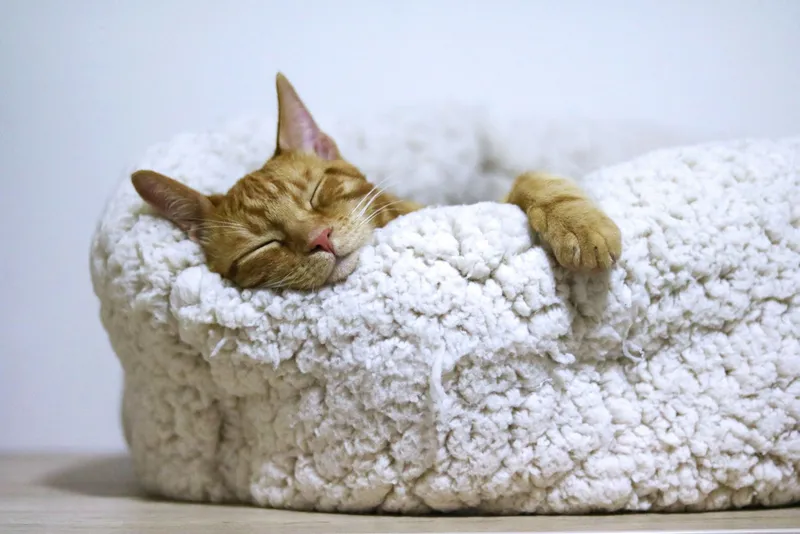
A settled cat in a quiet room: loose posture, eyes half closed, no scanning for exits.
What actually needs to be in it
The list is short. A litter box, food and water set apart from each other and from the litter box, a comfortable bed or blanket. At least one place to hide within the room itself, like a covered bed or an open box turned on its side. Scratching options help too, since a stressed cat often wants to scratch as an outlet. Resist the urge to over-furnish it. A cluttered room defeats the purpose, and an enclosed hiding spot inside the safe room matters more than anything else on this list.
Two rules do most of the work here: the litter box is as far from the food as the room allows, and the bed sits in the corner furthest from the door while the door itself stays open.
Give them a way out, always
A safe room should never be a locked room in the sense of trapping a cat somewhere they can’t choose to leave. Crack the door, use a door that latches but doesn’t fully seal, or set up a cat gate instead of a closed door if the room allows it. The goal is a space a cat retreats to voluntarily, not a space they’re confined to. A cat that associates the room with being shut in will stop treating it as safe.
Use it proactively, not just during a crisis
A safe room that only gets used during actual emergencies, the day guests arrive, the day the movers show up, is a room a cat has no prior positive association with. That makes it less effective exactly when it matters most. Let a cat explore and nap in it on ordinary days too, with treats or a meal placed there occasionally. That way the space reads as generally good, not just as the room that appears when something stressful is already happening.
When a safe room isn’t enough on its own
A dedicated space helps with situational stress, a single stressful day or a specific trigger, but it isn’t a fix for stress that’s constant or getting worse over time. If you’re not sure whether what you’re seeing is ordinary situational stress or something more persistent, our guide on reading your cat’s stress signals breaks down what to look for. Our guide on when to call a vet behaviorist covers what to do if a safe room and other home fixes haven’t moved the needle after a few weeks of genuinely trying.