Enrichment for a cat that's scared of new things: slow introductions for a neophobic cat
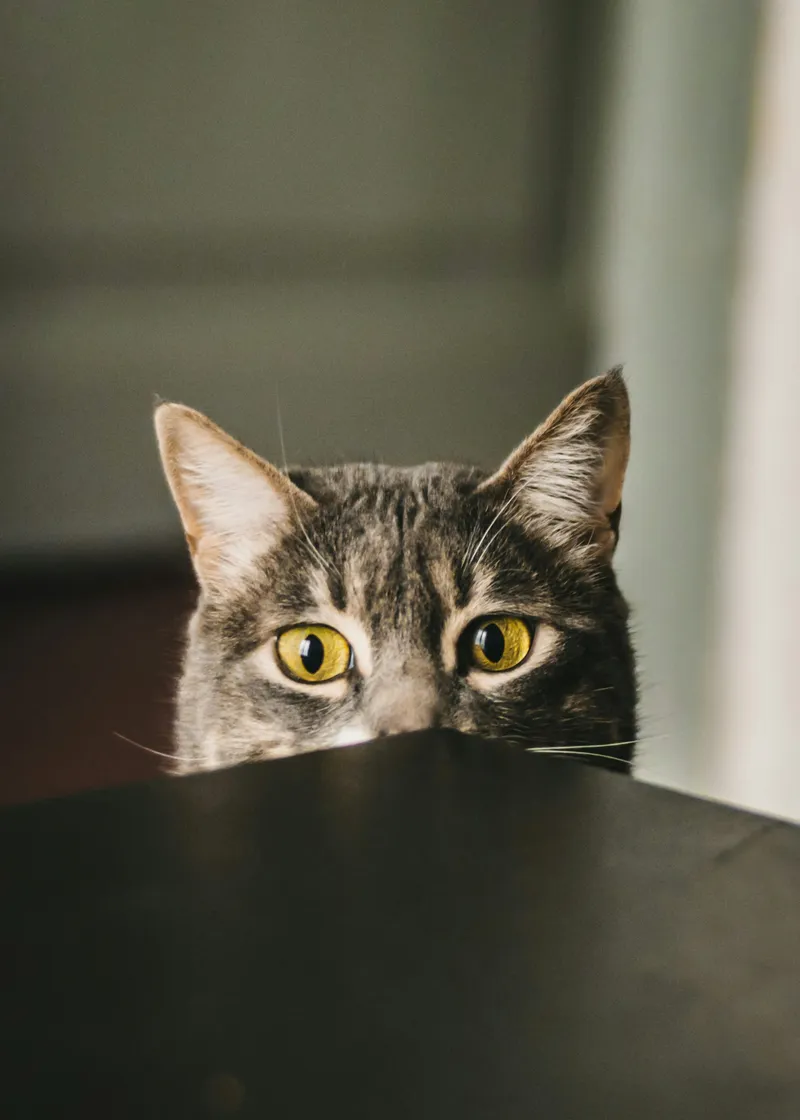
Enrichment advice tends to assume the hard part is coming up with new things for a cat to do. For a lot of cats it’s the opposite problem. The new puzzle feeder, the new tunnel, the new toy sits untouched in the middle of the floor for days because anything unfamiliar reads as a threat first and a game second. That’s neophobia, a fear response to novelty itself, and it means the usual “just introduce more enrichment” advice can backfire if it’s done too fast.
What neophobia actually looks like
It’s easy to mistake for simple disinterest. A neophobic cat doesn’t ignore a new object so much as actively avoid the part of the room it’s in, taking a longer path around it or refusing to eat nearby until it’s been there for days. Freezing, a wide-eyed stare, or a slow retreat when a new item is set down are all more consistent with fear than boredom. Our guide to reading stress signals covers how to tell a fear response apart from a cat that’s simply unimpressed.
Why more enrichment can make this worse
The instinct with an under-stimulated cat is to add more: another toy, a second tunnel, a new perch, all at once. For a neophobic cat, a room that changes in several ways at the same time reads as unstable rather than exciting, and the response is often to retreat rather than investigate. Our guide on how long it takes a cat to settle into a new home covers the same principle applied to a whole move, where too much change at once slows adjustment down instead of speeding it up.
The fix isn’t less enrichment. It’s pacing: one new object at a time, left in place long enough to stop being new before the next one shows up.
Let the object become boring before it becomes interesting
Placing a new item off to the side of a room the cat already treats as safe, rather than in the middle of an open floor, gives it a chance to become part of the background. A cat that walks past an object daily without anything bad happening starts filing it under “furniture” instead of “unknown,” and that’s usually the point where actual curiosity shows up. Rushing to make the object do something (a puzzle feeder that dispenses food, a toy that moves) before that background stage happens tends to just add a second unfamiliar element on top of the first.
Pair the new object with something already safe
Setting a new toy near a food bowl, a favorite blanket, or a spot where a cat already naps links it to something the cat already trusts. That’s a better bet than asking the object to earn trust entirely on its own. A snuffle mat placed next to a normal food bowl, for a few days, tends to get investigated faster than the same mat set down alone in an empty room. Our scent enrichment guide covers a related version of this: introducing a new smell in a space the cat already treats as safe, rather than an unfamiliar room.
Watch the distance, not just the behavior
A cat that stays ten feet from a new object but stops leaving the room entirely is still making progress, even if it hasn’t approached yet. Tracking how close a cat is willing to get, and how long it takes for that distance to close, is a more reliable progress marker than waiting for outright investigation. A shrinking distance over several days is the sign to leave the object exactly where it is. A distance that isn’t changing after a week or two is the sign to try pairing it with something safer instead of assuming it’ll resolve on its own.
When to just remove it and try again later
Not every object is going to land, and forcing the issue by leaving something in place for weeks with zero progress doesn’t usually help. If a cat is still avoiding an entire room over a new item after a couple of weeks, removing it and reintroducing a smaller, less obtrusive version later is a reasonable reset rather than a failure. A neophobic cat that’s cornered into tolerating something it’s still afraid of tends to generalize that fear to the room itself, which undoes more progress than one skipped toy costs.
When this points to something bigger than one new toy
A cat that treats nearly everything unfamiliar this way, not just one specific object but new furniture, new people, new sounds, has a temperament that goes beyond a single slow toy introduction. Our guide on when to call a vet behaviorist covers the point where a general pattern of fear is worth professional input rather than another round of gradual exposure at home.