Why does my cat hide when guests come over?
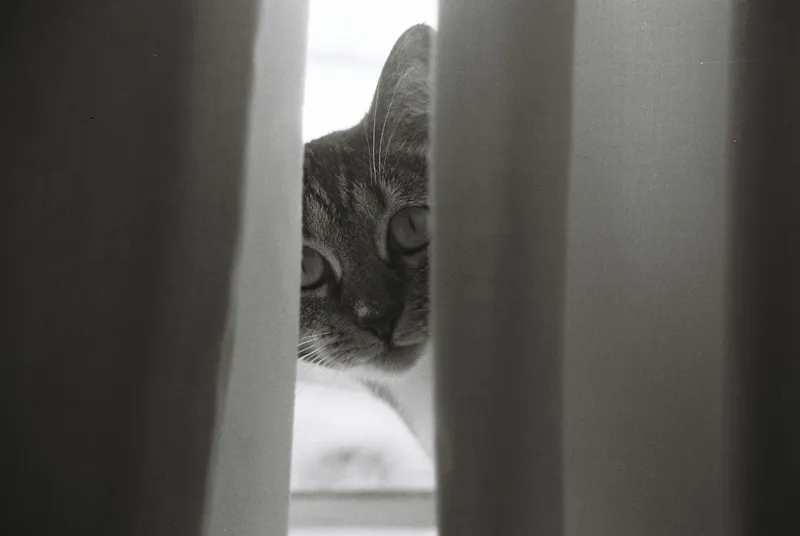
A cat that greets you at the door every day and then vanishes the moment a guest arrives isn’t being rude, and it usually isn’t a sign that something’s wrong. It’s a fairly ordinary response to an unpredictable, loud, unfamiliar variable showing up in a space the cat considers safe and controlled.
Why guests specifically
Cats build their sense of safety around routine and scent. A guest brings a new smell, a new voice, often a different volume and pace of movement than anyone in the household. None of that is threatening on its own, but it’s unfamiliar, and unfamiliar reads as “worth avoiding” to a cat’s threat-assessment system by default. Hiding isn’t fear exactly; it’s the low-cost option while the cat figures out whether the new variable matters.
When it’s completely normal
If your cat hides for the first ten or twenty minutes of a visit and then reappears once the noise settles (or once the guest sits down and stops moving around), that’s a normal adjustment period. It’s not a problem to fix. Plenty of cats never fully warm up to strangers and prefer to observe from a distance rather than interact, and that’s a personality trait, not a welfare issue.
When it’s worth paying attention to
A few patterns are worth noting rather than dismissing:
- Hiding for the entire length of a visit, every time, with no exceptions for familiar repeat guests
- Refusing to eat, drink, or use the litter box until well after guests leave
- Hiding becoming the cat’s response to a wider and wider range of everyday events, not just guests
None of these are emergencies on their own, but together they suggest a cat running a bit hot on general stress, which is worth reading through our guide on stress signs to watch for.
What actually helps
Give the cat a specific hiding spot that’s genuinely theirs, not just wherever they happen to end up. A covered bed, a gap under furniture, or a high shelf they can reach but a guest can’t all work, as long as it’s reachable without crossing through the middle of the room where the action is.
Ask guests not to approach the cat first. Most cats come out faster when the pressure is removed entirely: no calling their name, no reaching toward the hiding spot, no trying to coax them out. A cat that emerges on its own timeline is far more likely to stick around once it does.
If visits are frequent (a regular weekly guest, a partner who stays over often) it’s worth letting the cat associate that specific person with something good on a low-pressure schedule. That means a treat tossed gently in their direction from a distance, not offered by hand until the cat approaches first.
What not to do
Don’t pull a cat out of a hiding spot to “make them be social.” It removes the one thing that was working (a sense of control over the situation) and tends to make the next hiding episode start earlier and last longer.