Play fighting vs. real fighting between cats: how to tell the difference
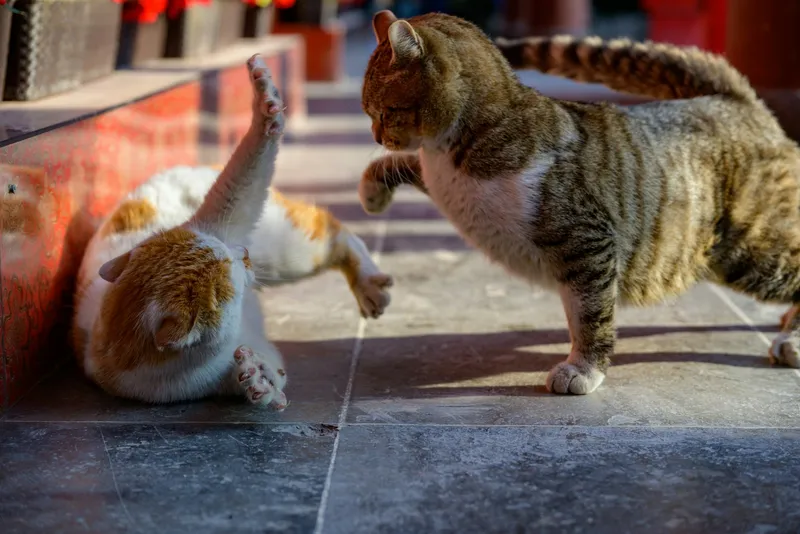
Two cats rolling on the floor, batting at each other with open paws, look almost the same whether they like each other or can’t stand each other. That similarity is why so many people either break up harmless play out of caution or let a real fight run too long because “they play rough all the time.” The difference isn’t in how physical it looks. It’s in the sound, the pauses, and what the two cats do the moment it’s over.
Silence usually means play, noise usually means it isn’t
Play between cats is mostly quiet. You might hear a soft chirp or an excited squeak, but sustained yowling, growling, or shrieking is a fight signal almost every time. If a wrestling match includes real screaming rather than the occasional small sound, treat it as a fight even if the cats look evenly matched physically. Noise is the single fastest way to tell the two apart from across a room, before you’ve had time to read anything else.
Play has pauses. A fight usually doesn’t.
Watch what happens over 10 or 15 seconds, not just the first second of contact. Cats that are playing take breaks: one rolls onto its back, both freeze for a moment, one walks a few steps away and looks back like it’s inviting a restart. Those pauses are cats checking in with each other, and they happen on their own without you stepping in. A real fight is more continuous, with less of that stop-and-reset rhythm, and it tends to escalate rather than settle into a back-and-forth pattern.
Claws in versus claws out
Play swats usually land with a soft paw and claws kept retracted, even when the movement looks fast and forceful. A cat that’s genuinely fighting extends its claws, and you’ll often see it after the fact: scratches on the ear, nose, or forelegs that weren’t there before. Bites work the same way. A play bite is usually quick and inhibited, without breaking skin, while a fight bite lands harder and holds on longer. If you find fresh scratches or puncture marks after a session you assumed was play, reconsider what you actually watched.
Body position tells you who’s still enjoying it
In healthy play, both cats take turns being on top, on their back, or chasing versus being chased. A cat that’s always the one pinned, always the one running away, or always the one that ends the session by fleeing to another room isn’t an equal participant in a game. That imbalance, more than any single moment of contact, is often the clearest sign that what looks like mutual play is actually one cat tolerating or losing to the other. Our guide to reading hidden tension covers the quieter signals that show up between these sessions, not just during them.
What happens right after tells you the most
Two cats that were playing usually groom themselves, wander off separately to rest, or start playing again within a few minutes. Two cats that were actually fighting tend to avoid each other afterward: one hides, ears stay flattened longer than they should, or one refuses to come out for food at the usual time. If a wrestling match ends with one cat disappearing under furniture for the rest of the day, that’s worth treating as a fight in hindsight, regardless of how it looked in the moment.
When you’re not sure, watch instead of intervening immediately
Jumping in the instant two cats start moving fast can interrupt play they both wanted and needed, particularly between kittens or between a kitten and a tolerant adult. If the volume stays low and both cats keep initiating, give it a few more seconds before deciding it’s a problem. If it’s genuinely unclear which one you’re watching, a loud clap or a tossed toy nearby is a safer way to break it up than reaching in with your hands, since a real fight can redirect onto whoever intervenes. If sessions are turning into real fights on a regular basis, our decision guide on how much separation fighting cats need covers what to do once play has stopped being play.