Daily routines that lower tension in a multi-cat home: feeding, play, and solo time
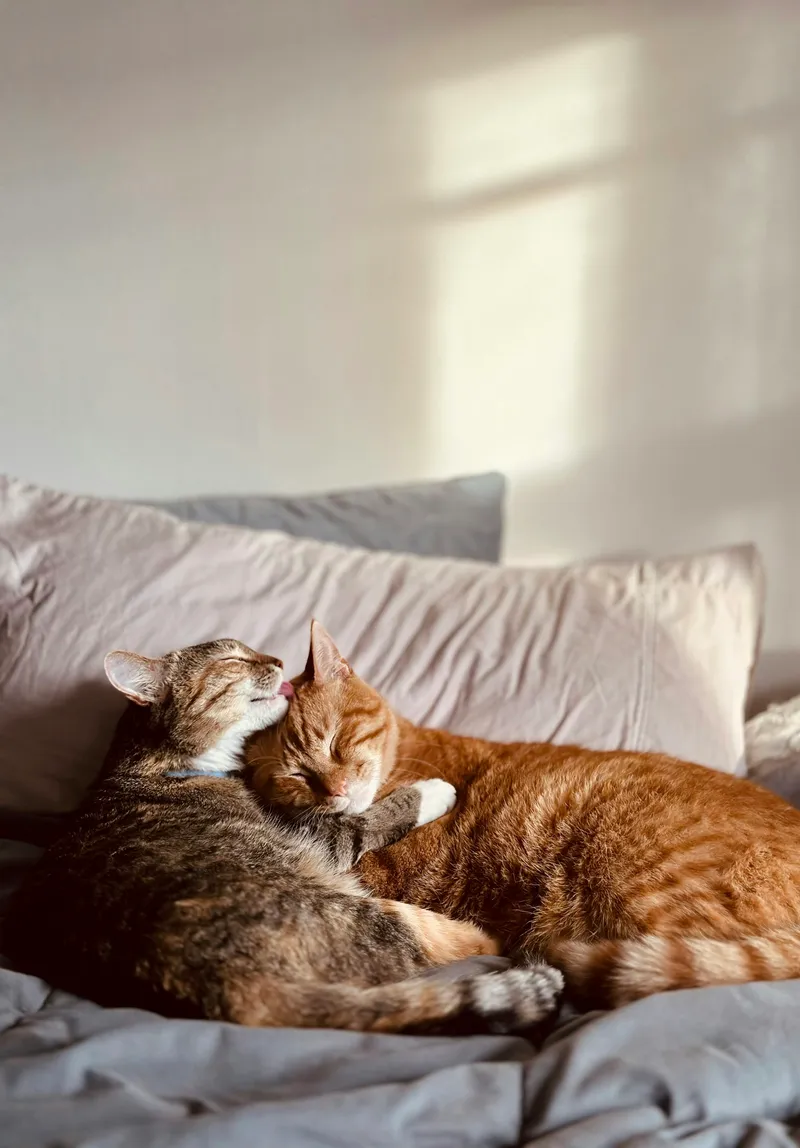
Most multi-cat advice centers on resources: enough litter boxes, enough perches, enough bowls. That’s the right starting point, but a household can have plenty of everything and still run tense if the daily routine around those resources rewards one cat at the expense of another. Who gets fed first, who gets the first turn with the wand toy, who gets uninterrupted time with you: those small, repeated patterns add up faster than a single missing litter box does.
Feeding order is a status signal whether you mean it to be or not
Feeding the same cat first every single day, because that cat is pushier at the bowl or simply gets to you first, teaches both cats something about the pecking order in the house. The more confident cat learns it gets priority access. The other cat learns to wait and, often, to stay a little more guarded around food generally. Alternating who gets fed first, or feeding simultaneously in separate spots, removes that daily lesson. If food guarding is the specific problem rather than just feeding order, our feeding stations for food guarding roundup covers the equipment side of that.
Play rotation prevents one cat from absorbing all the attention
A single wand-toy session with both cats chasing the same target usually ends with the more assertive cat dominating it and the other cat disengaging early. Short, separate sessions, even five minutes each in different rooms, give the less pushy cat a real turn instead of a few seconds of leftover interest. This matters more in homes where one cat is visibly more playful or food-motivated, since that same cat tends to crowd out the other in every shared activity, not just meals.
Solo time with you is not optional for the cat that avoids conflict
A cat that regularly loses out on shared resources or shared play often compensates by withdrawing, not by competing harder. That cat still needs attention, just on different terms: a few minutes alone in a room with the door closed, away from the other cat’s presence entirely. Skipping this because “the cats get plenty of attention together” misses the point. Together-time in a multi-cat home usually isn’t split evenly, so time that’s structurally guaranteed to go to the quieter cat is the part that’s easy to drop.
Watch for the routine itself becoming a bottleneck
Resource placement can create a choke point even with enough resources, and the same is true of timing. If both cats’ routines funnel through the same hallway at the same time each morning, that overlap creates daily friction. A feeding spot right next to the one litter box a cat prefers is a common version of this, and it has nothing to do with the resources themselves. Staggering the timing, not just the location, of feeding and litter access can defuse a conflict that looks like it’s about the box when it’s really about two cats trying to use the same space at the same moment. Our litter box rules for multi-cat conflict and resource guarding checklist both cover the placement side of this; routine timing is the piece that sits on top of good placement.
A predictable routine matters more than a perfectly fair one
Perfect fairness, identical treatment down to the second, isn’t the actual goal and isn’t realistic in a house with two different personalities. What matters more is predictability. A cat that knows roughly when its turn comes, whether that’s the second feeding slot or the after-dinner play session, tends to settle into that pattern rather than escalate competition to get attention sooner. Tension often rises not because one cat gets less, but because the order and timing feel random from day to day.