Catio and supervised outdoor access 101: what to check before you let an anxious cat outside
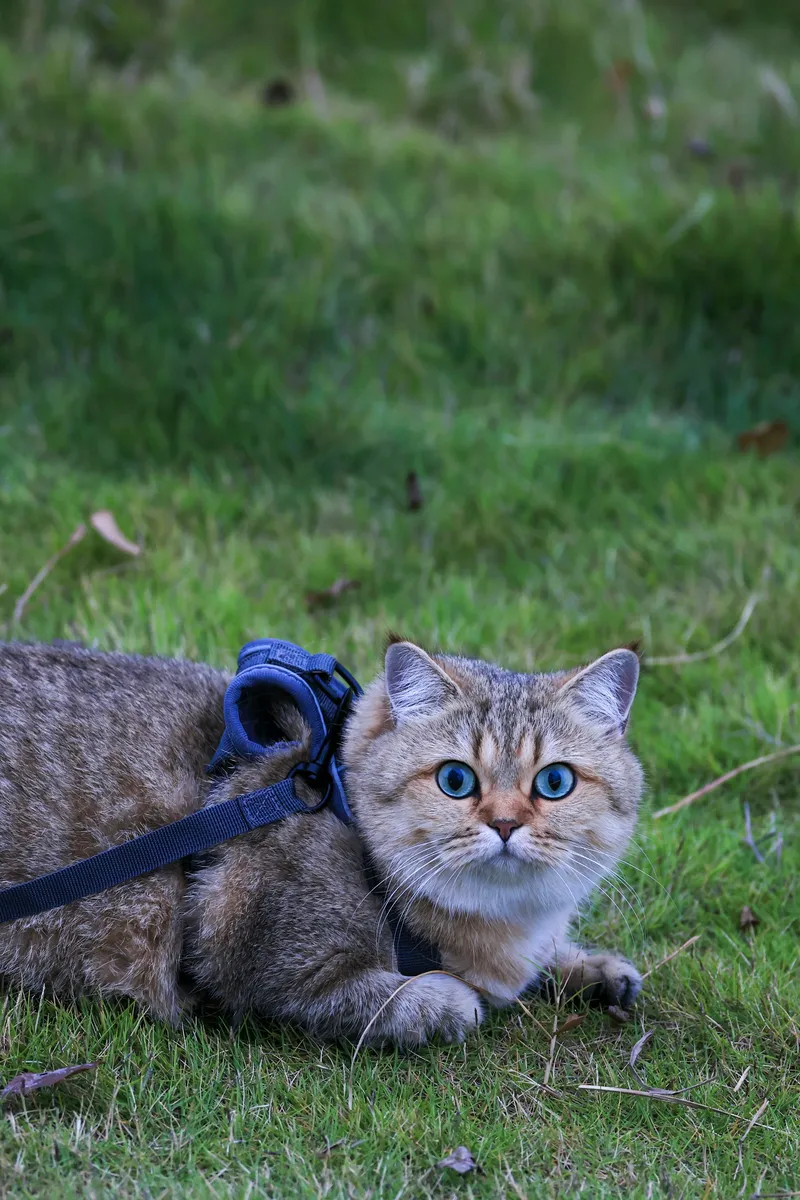
Giving an indoor cat supervised outdoor access, through a catio, a harness walk, or a leashed backyard session, sounds like a straightforward win: more stimulation, more variety, less of the pent-up energy that turns into 2 a.m. zoomies or destructive scratching. For a cat that already runs anxious, though, “more stimulation” isn’t automatically good. The setup that works depends less on the equipment and more on whether the cat in question actually wants what’s on the other side of that door.
Outdoor access is enrichment, but it’s also a lot of new information at once
A cat that’s spent its life indoors has never had to process a passing car, an unfamiliar dog barking two yards over, or a bird landing close enough to trigger a full-body stalk. That’s exactly the stimulation enrichment is supposed to provide, but it arrives all at once instead of in the small, controllable doses that indoor enrichment usually offers. A cat that’s already prone to hiding or general stress can find that overwhelming rather than exciting, at least at first. The goal isn’t to avoid new stimulation, it’s to introduce it in a size the cat can actually handle.
Read the first session, not the cat’s usual personality
A cat that’s confident indoors doesn’t automatically stay confident the first time it’s outside a screen. Watch for the difference between active exploring (moving around, sniffing, ears forward, tail up or gently swaying) and frozen tolerating (crouched low, ears back or flat, tail tucked, not moving from one spot even when nothing nearby has changed). The second pattern means the session should end there, calmly, rather than being extended because the cat “should” be enjoying it. A cat that freezes on day one can still warm up over several short sessions. But stretching out a session where a cat is already shut down usually teaches the opposite lesson: that outside is something to endure, not explore.
Match the format to the cat, not the other way around
A structure a cat can enter and leave on its own terms, a walk-in catio with a cat door, or a window box it can retreat from into a familiar room. That generally works better for an anxious cat than a harness walk, where a person controls the pace and there’s no way to simply go back inside mid-session. Neither format is wrong. A cat that startles easily and then needs somewhere to immediately hide is better served by an enclosure attached to its own territory than by being several yards from the door on a leash when something spooks it.
Escape risk doesn’t disappear just because it’s “outdoor access”
It’s easy to assume a catio or a harness solves the escape problem, since the cat is technically contained. In practice, a startled cat can slip a poorly fitted harness, or find the one weak seam in an enclosure, faster than most people expect. Check hardware by hand before every session rather than trusting that it held up last time. Keep a backup ID on the cat itself (a collar with a name and phone number, at minimum) regardless of how secure the containment looks. If a cat does get loose, our guide on what to do in the first 24 hours after a cat gets out covers the search pattern that actually works.
Build up slowly, and let a bad day be a bad day
Five or ten minutes for a first session is plenty, even in a large enclosure. A cat that does well can get longer sessions over the following weeks; a cat that doesn’t should get shorter, calmer ones, not a bigger push to “get used to it.” Weather, noise from a neighbor’s yard work, or even just a bad sleep can turn a normally confident cat’s outdoor session sour on a given day, and that’s not a sign the whole idea failed. It’s a sign to try again another day, not necessarily to push through the one that isn’t going well.
If a cat never warms up to it
Some cats genuinely prefer their world stay indoors, and that’s a fine outcome, not a training failure. If a cat retreats every time and shows no sign of that changing after several calm, short attempts, indoor enrichment alone is a completely reasonable place to stop. (Our budget enrichment guide and our best catio kits and outdoor enclosures roundup both cover physical setups worth trying first.) Forcing outdoor time on a cat that’s told you clearly it doesn’t want it tends to add stress rather than relieve it, which defeats the point of trying in the first place.