Best Friends by Sheri Calming Donut Bed review: what a raised rim actually does for an anxious cat
Our take
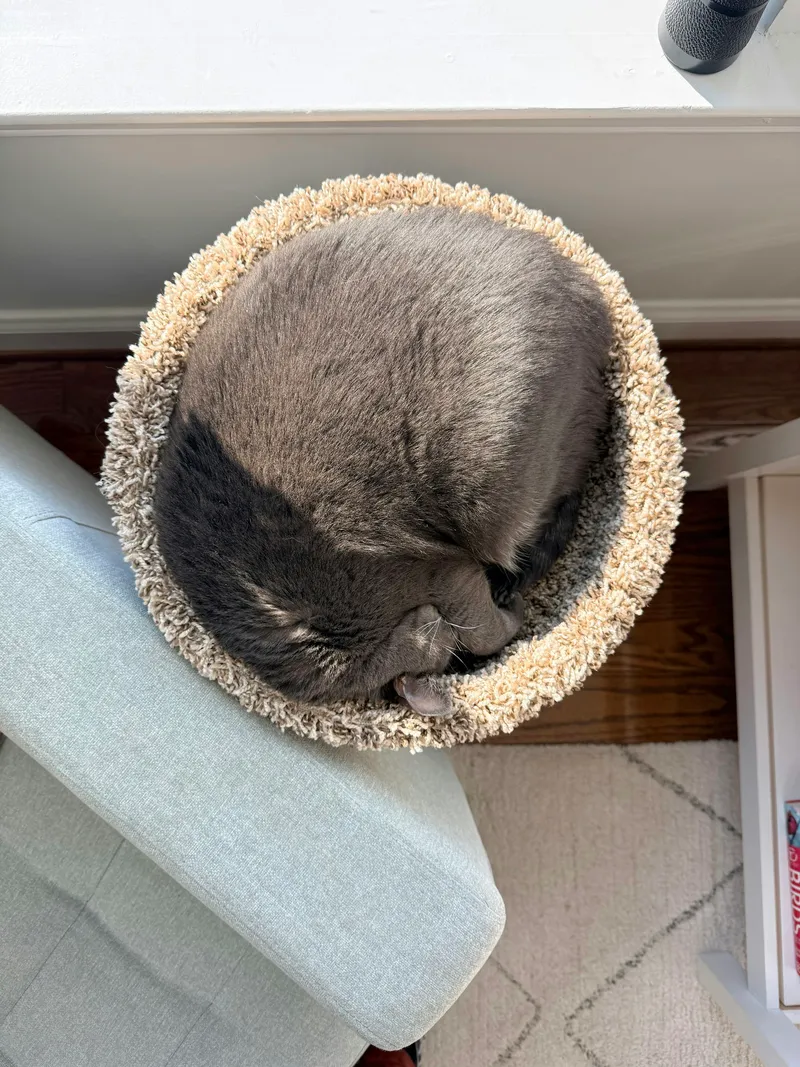
A plush ring with a raised rim that a cat can press its back or head against while curled up. That's a real, well-understood comfort mechanism, contact along the body's edge, not a marketing invention. It doesn't hide a cat the way a covered cave bed does, and the calming claim in the name is about physical design, not a tested behavioral outcome.
Check price at AmazonDisclosure: This post contains affiliate links. As an Amazon Associate, we earn from qualifying purchases at no extra cost to you. See our full affiliate disclosure.
A donut bed shows up in most lists of calming cat products next to pheromone diffusers and weighted wraps, but it works on a completely different principle. There’s no scent signal and no pressure garment involved. It’s a ring of stuffed, faux-fur fabric with a raised edge, and the entire case for it rests on what a cat’s body does when it curls up against that edge instead of lying on a flat cushion.
The raised rim is the whole design, so it’s worth understanding why it works
A cat curling into a tight circle and tucking its head against something solid is a normal resting posture, one you’ll see on a couch arm, in a cardboard box, or wedged into a sink. The donut shape just builds a permanent, soft version of that edge into the bed itself. Contact along the back, head, or paws while resting is a genuine comfort cue for a lot of cats, part of why boxes and other tight spaces get used so often in the first place. That’s a real physical mechanism. It’s just not the same thing as a clinically tested anxiety treatment, and the bed’s name leans on “calming” a lot harder than the evidence behind this specific product does.
“Self-warming” means the fur holds heat, not that it’s heated
The name suggests something powered, and it isn’t. The faux shag fur traps body heat the way any thick pile fabric does, so the bed feels warmer to lie in than a flat mat would, without a cord, a battery, or a warming element anywhere in it. That’s a passive effect, not an active one. A cat picking a sunny windowsill over the bed on a cold day isn’t a malfunction. It just means direct sun is doing a better heating job than trapped fur can.
It doesn’t hide a cat, and that’s a real difference from a covered bed
Our covered cat cave beds roundup covers a different design entirely, a hooded or enclosed shape built for a cat that wants to vanish from view. A donut bed is open on top. A cat resting in one is still fully visible from across the room. For a cat whose stress response is specifically about needing to disappear, hiding under furniture or into a covered bed does something this shape can’t. For a cat whose main need is a soft edge to curl against in a visible spot, the open design is exactly the point, since it doesn’t cut the cat off from watching the room.
Washability matters more here than on a flat mat
Shag fur collects loose hair and dust more visibly than a smooth woven cover does, so this style of bed needs more frequent washing to stay looking clean. The listing describes the whole bed as machine washable. A water- and dirt-resistant base underneath is a genuinely useful detail on top of that. It keeps an accident or a wet paw from soaking straight through to the floor underneath, instead of just moving the mess one layer down.
Sizing is about the curl, not just the cat’s overall size
This bed line runs from a small size meant for cats and small dogs up through much larger versions built for large dogs. For a cat, the small size is the one that actually delivers the tight, contained curl the design depends on. Sizing up “for more room” defeats the purpose here, since a bed a cat can stretch out flat in loses the snug contact against the rim that’s the entire mechanism behind it.
Who this is wrong for
Skip it for a cat that stretches out flat to sleep instead of curling into a ball. The rim does nothing for a cat that isn’t tucking its body against an edge in the first place. Skip it if the goal is a hiding spot rather than a soft one to curl in visibly. A covered cave bed or a cardboard box does that job and this open shape doesn’t. Skip buying just one for a multi-cat household expecting them to share it. Curling up together in a single donut happens occasionally between bonded cats, but it’s not something to plan a purchase around.
Bottom line
Buy it for a cat that already curls into a tight circle to rest and would benefit from a soft, warm edge to press against while doing it. Don’t buy it expecting a tested reduction in anxiety the way you’d look for in a supplement or a pheromone product. And don’t buy it for a cat whose actual need is to disappear from view rather than curl up in plain sight. It does one physical thing, giving a curled-up cat something to lean into, and it does that one thing honestly.
What we liked
- The raised rim gives a curled-up cat something to press its back, head, or paws against, which is a real source of physical comfort for a lot of cats, not just a soft-sounding feature name
- Faux shag fur retains body heat passively, so it stays warmer than a flat mat without needing a plug or a battery
- The whole bed is machine washable, which matters for a bed that's going to collect fur and the occasional accident
- A water- and dirt-resistant base keeps it from soaking through onto a wood or tile floor underneath
- It's sized for a single cat curled into a tight circle, so a small cat gets a snugger, more contained fit than a bed built to size up for a dog too
What we didn't
- "Calming" describes the design goal, not a tested reduction in anxiety. There's no independent behavioral study behind this specific bed the way there is behind some pheromone or supplement products
- It's an open design with no hood or walls, so a cat that wants to fully disappear from view won't get that here the way it would from a covered cave bed
- The shag fur shows fur and dust in a way a smoother woven fabric wouldn't, so it needs more frequent washing to stay looking clean
- A cat that prefers stretching out flat instead of curling into a circle won't use the shape the way it's designed to be used
- One bed fits one cat at a time. A multi-cat home needs a separate bed per cat rather than one shared donut, since cats curling up together in a single ring is the exception, not the rule