Vet visit anxiety: what's normal fear vs what needs a behaviorist
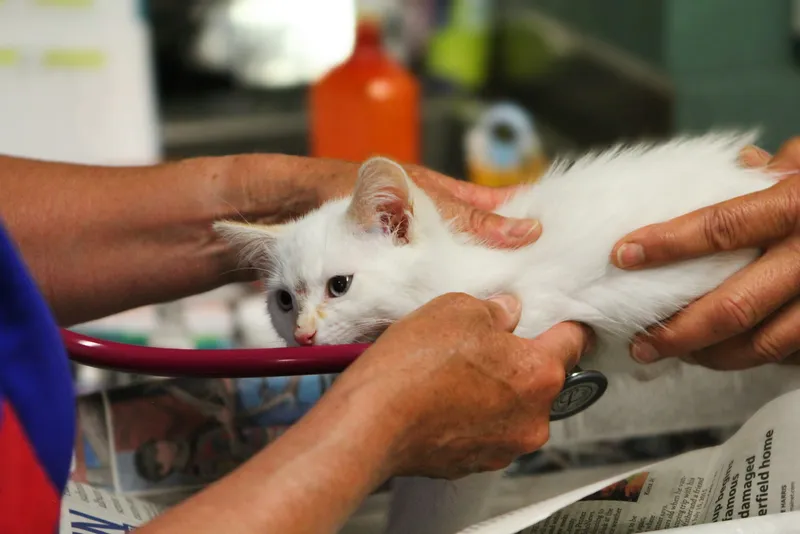
A cat that yowls in the carrier, flattens against the exam table, or needs two people to hold it still for a nail trim is not unusual. Vets see this constantly, and it doesn’t automatically mean your cat has an anxiety problem that needs professional treatment. What actually separates ordinary vet-visit fear from something worth escalating is less about how dramatic the visit itself looks, and more about how far the fear reaches outside of it.
What ordinary vet fear looks like
A cat that hides when the carrier comes out, yowls in the car, and tenses up on the exam table is having a completely normal fear response to an unfamiliar place full of unfamiliar smells, sounds, and hands. Panting, dilated pupils, flattened ears, and a low crouch during the visit itself are all expected. So is a cat that races straight to a hiding spot the moment you’re back home. As long as that cat is eating, drinking, and acting roughly like themselves again within a few hours of getting home, this is well within the range of normal.
Signs the fear is spreading beyond the visit
A few patterns suggest the anxiety isn’t staying contained to the appointment:
- Refusing to eat or drink for most of a day after getting home, not just the first hour or two
- Hiding for a full day or longer after a routine visit, well past the usual settling-in window
- Starting to react fearfully to the carrier itself weeks before any appointment is scheduled, purely from seeing it out
- New defensive aggression (hissing, swatting, biting) toward familiar household members in the hours after a visit, not just toward vet staff during it
- A cat that used to tolerate visits reasonably well getting measurably worse over several appointments in a row, instead of staying roughly the same
One or two of these on an unusually bad visit day isn’t automatic cause for concern. A pattern that repeats across visits, or that’s clearly getting worse each time, is.
What you can try before escalating
Carrier training done well ahead of the actual appointment does more than almost anything else here. Leave the carrier out as regular furniture between visits rather than only producing it right before a trip, ideally with a blanket or worn t-shirt inside that already smells like home. See our guide on carrier and travel prep for the same leave-it-out-early approach applied to a full move, which works the same way for a single vet trip.
Ask your regular clinic about lower-stress scheduling options if they offer them: a quieter time of day, a separate cat-only waiting area, or going straight into an exam room instead of sitting in a lobby with dogs. Some clinics will also let you bring a familiar-smelling towel to drape over the carrier in the waiting room, which cuts down on visual stimulation considerably.
A synthetic pheromone spray on the inside of the carrier about fifteen minutes before you leave, giving it time to off-gas the alcohol carrier before your cat gets in. That’s a low-cost thing to try before assuming you need a bigger intervention.
When it’s time to call a vet behaviorist
If the signs above are showing up consistently, that’s the point to ask your regular vet for a referral to a veterinary behaviorist rather than continuing to just push through visits the same way. Or if your cat’s fear has escalated to the point of aggression that puts your vet’s staff or your own household at risk, same thing. This is also worth doing sooner rather than later if you notice the fear generalizing. That includes a cat that starts avoiding the room where the carrier lives, or reacting fearfully to things that resemble a car ride (keys jingling, a jacket going on) even outside of actual vet trips.
A veterinary behaviorist is different from a general trainer. They can evaluate whether anti-anxiety medication makes sense for a specific case, alongside a structured desensitization plan, rather than relying on carrier training alone once fear has become this entrenched.
What to expect from that first behaviorist visit
The first appointment is usually a long, detailed conversation rather than a hands-on session: history of when the fear started, how it’s changed over time, what’s been tried already, and what a typical visit looks like start to finish. Bringing a few notes or a short phone video of your cat’s carrier behavior at home can save time and give the behaviorist more to work with than a description alone. Expect a gradual plan built around small, repeated, low-stakes exposure rather than a single fix, since that’s what actually changes a cat’s association with the whole process over weeks and months, not one appointment.