Taking an indoor-outdoor cat fully indoor after a move: what actually changes
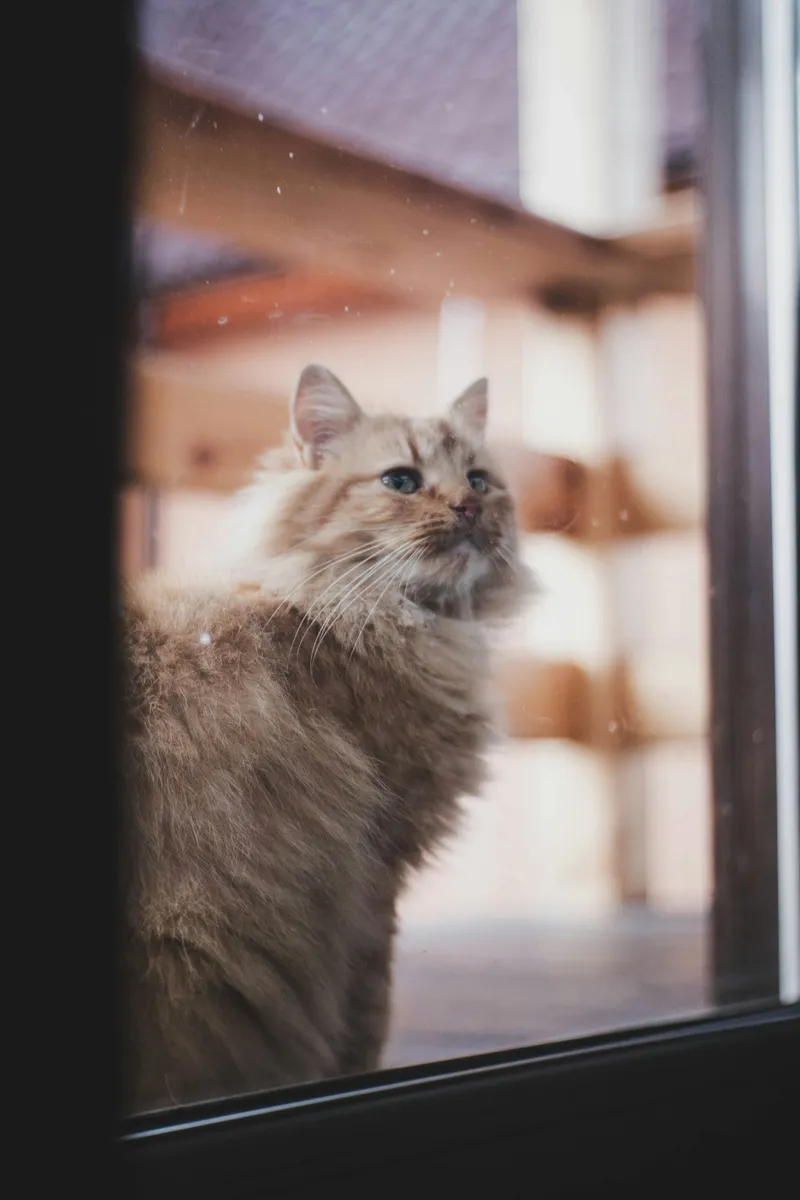
Most of our moving-change advice assumes a cat who was already indoor-only and just needs to learn a new floor plan. A cat who used to come and go through a cat flap or a supervised yard door is solving a different problem. The move didn’t just change the address. It removed a part of how that cat spent its day, and it usually happened without any transition period at all.
The move is often the reason for the switch, not just the timing
Few people decide “today my cat goes fully indoor” as its own plan. It happens because the new place backs onto a busier road, the yard isn’t fenced the way the old one was, or a lease or HOA simply doesn’t allow outdoor access. The decision gets made for practical reasons unrelated to the cat’s temperament, then lands on the same day as every other disruption a move brings. That stacking is what makes this harder than either change would be alone.
Expect a rougher first two weeks than an indoor-only cat gets
A cat who has never known anything but four walls doesn’t miss what it never had. A cat who’s lost outdoor access is missing something specific: an existing routine of patrol, scent-marking territory boundaries, and choosing when to be alone versus social. That loss can look like pacing at doors and windows, yowling at specific times of day the cat used to go out, or a spike in scratching at exits it used to walk through freely. None of that is misbehavior. It’s a cat testing whether the old option is really gone.
Litter box use can get worse before it gets better
A cat with outdoor access often used soil or mulch outside for at least some elimination, even if it also used a litter box indoors. Losing that option, combined with the general stress of a move already covered in our guide on cat spraying or marking in a new home, raises the odds of litter box problems in the first few weeks. Add a second box in a new location before problems start, not after. A box near a favorite window, where the cat can still watch the outdoor world it used to patrol, tends to get used more reliably than one tucked in a back room.
Replace what the outdoors was actually providing
Outdoor time wasn’t just exercise. It supplied changing scents, unpredictable sounds, sun and shade to move between, and something new to investigate most days. A cat tree by a window covers some of that, but not all of it. Rotate toys weekly instead of leaving the same three out permanently, and consider a window perch positioned where there’s actual foot or bird traffic to watch, not just a wall. If the yard is usable at all, a catio or enclosure lets a cat get real outdoor air and smell without the risk that likely drove the decision to go indoor-only in the first place.
Watch the scale, not just the mood
A cat who used to patrol a yard was getting movement that a cat tree and a few toy sessions a day don’t fully replace. Weight gain in the first couple of months indoors is common enough to watch for on purpose, not just something to notice after the fact at a vet visit. Interactive play twice a day, even five minutes each, does more for both boredom and weight than one long session on the weekend.
This settles, but on a longer timeline than the move itself
The adjustment period covered in our realistic settling timeline is about learning a new territory. Losing outdoor access is a separate adjustment layered on top of it, and it can take longer, sometimes a couple of months before the door-pacing and yowling fade to occasional rather than daily. If it hasn’t eased at all after a couple of months, or the cat has stopped eating or is over-grooming, that’s worth a vet visit rather than more waiting. Our guide on when to call a vet behaviorist covers where that line sits.