When change doesn't mean moving: renovations, new furniture, and houseguests
Not every disruption to a cat’s world comes with a moving truck. A contractor tearing out a bathroom, a living room rearranged for new furniture, or a week of houseguests sleeping on the couch can all read to a cat the same way a full relocation does. The layout and scent map they’d built up stops matching what’s actually there. The good news is the response that works for an actual move mostly works here too, just scaled down.
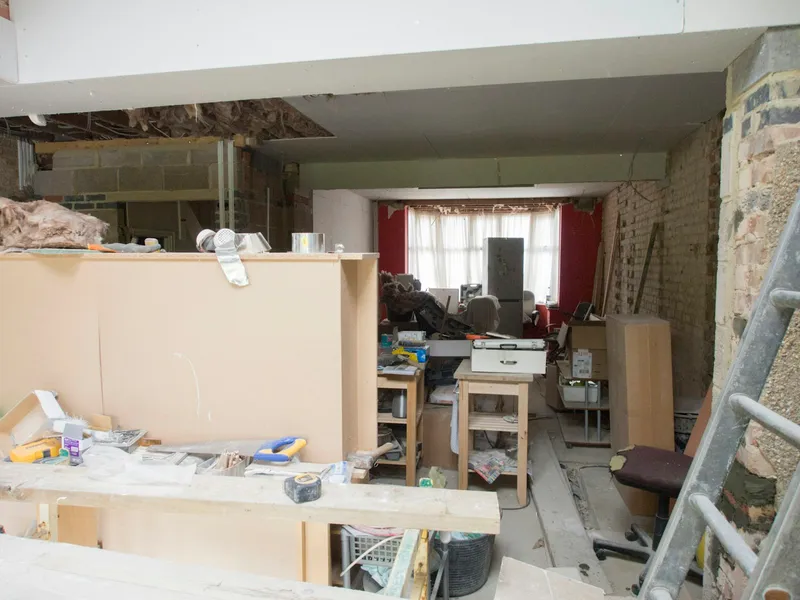
Renovations and repair work
Power tools, unfamiliar people in the house, and rooms blocked off or full of unfamiliar objects are a lot for a cat to process at once, even without anything actually changing hands. Set up a quiet base room for your cat, away from the work zone, with their litter box, food, water, and a bed, and keep the door closed during active work hours. A white-noise machine or a TV left on low in that room can help mask drilling and hammering from elsewhere in the house. If the work spans more than a day or two, stick to the same base room each day rather than shuffling your cat around, since a stable refuge matters more than which specific room it is.
Rearranging or replacing furniture
Cats build a mental map of a room that includes furniture position, not just the walls and doors. Swapping the couch, moving the cat tree to a new corner, or replacing carpet with hardwood can leave a cat sniffing around and reorienting for a few days. That’s normal and not something to worry about on its own. Where possible, keep a few fixed points unchanged during a bigger furniture overhaul, like leaving the litter box and a favorite perch exactly where they were. So at least part of the room still reads as familiar while the rest resets.
Houseguests staying over
An extra person or two in the house for a weekend usually isn’t a big deal. But a longer stay, an unfamiliar guest sleeping in what used to be a quiet room, or a guest who doesn’t know to leave a nervous cat alone can push things further. Give your cat a room a guest won’t be using as a fallback space with their essentials, and ask guests not to chase, corner, or force interaction, even well-meaning ones. A cat that avoids the living room for most of a weekend and comes back out once guests leave is behaving completely normally.
A general approach that covers all of these
The common thread across renovations, furniture changes, and guests is that a cat’s stress tends to track how much of their familiar layout is disrupted at once, not how big the underlying event actually is to a person. Keeping the litter box, food, and water in a stable, undisturbed location, and giving your cat a fallback space that never changes no matter what’s happening in the rest of the house. That does most of the work regardless of which specific disruption is causing it. Our guide on introducing a resident cat to a new home’s territory covers the same base-room-first approach in more depth for a full relocation, and the same logic scales down cleanly for a smaller disruption.
Signs it’s more than a passing adjustment
A cat skipping a meal, hiding for the first day of noisy work, or avoiding the living room while guests are over is well within the range of normal. It’s worth paying closer attention if a cat stops eating for more than a day, avoids the litter box entirely, or is still hiding constantly a full week after the renovation wrapped up or the guests left. At that point, back off further (fewer visitors, work paused if possible, resources moved back to their original spot) before trying to reintroduce the change, and check in with a vet if appetite or litter box use hasn’t recovered.